
DTF vs Embroidery
DTF vs Embroidery for Corporate Wear in Zimbabwe: Which Should You Choose?
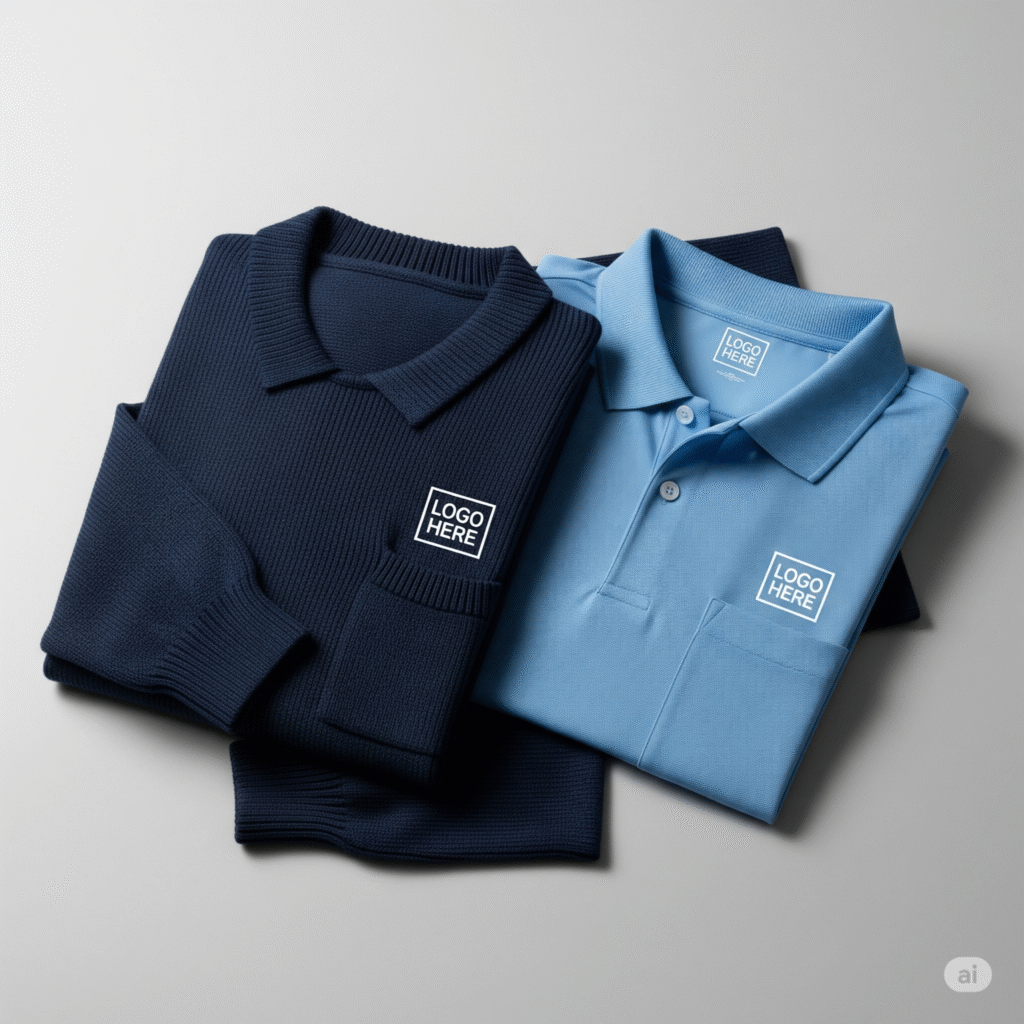
DTF vs Embroidery for Corporate Wear in Zimbabwe: Which Should You Choose?
Written by Donkudzie, Solid Arts Creativity Studio — printing, branding, and signage in Harare since 2017.
There’s no universal winner here. There’s just a right answer for your logo, your order size, and how long you need the uniform to survive.
DTF wins on cost and flexibility at almost any volume — it doesn’t punish you for a colorful logo, and there’s practically no minimum order. Embroidery wins on long-term durability and still reads as the more premium, corporate finish. If your logo is detailed or your order is small, start with DTF. If you’re outfitting front-of-house staff for years of heavy washing, embroidery earns its keep. Either way, at Solid Arts you’re looking at three days total from design to finished product, with items in hand 24 hours after you approve your design.
That’s the short version. If you’re an HR manager in Harare staring at a supplier’s quote form with two branding options and no idea which box to tick, you’re not alone. Almost every business owner who’s ordered corporate wear here has had this exact moment — usually the night before a briefing meeting, usually with a logo file that’s slightly too detailed for one of the two methods to handle well.
So let’s actually walk through it. Not the generic version you’ll find on a UK or US printing blog, but the version that accounts for Harare heat, real ironing habits, and the fact that most SMEs here order 15 to 40 shirts at a time, not 500.
What’s the Actual Difference Between DTF and Embroidery?
DTF (direct-to-film) prints your design onto a special film, coats it with an adhesive powder, then heat-presses that film onto the fabric — the design ends up sitting on the surface as a thin, flexible layer. Embroidery skips ink and film entirely: a needle stitches thread directly into the fabric, so the design becomes part of the weave rather than something applied to it.
That one difference explains almost everything else. Stitched thread outlasts a heat-applied layer over enough wash cycles, which is why embroidery still wins on raw longevity. But a printed film layer can carry any color, any gradient, any level of detail — something a needle physically can’t replicate — which is why DTF wins on design flexibility. Keep that trade-off in mind and the rest of this comparison will make a lot more sense.
Which Lasts Longer on Corporate Wear in Zimbabwe’s Climate and Wash Routines?
Embroidery, generally, over the long haul. Stitched thread is locked into the weave, so it shrugs off the repeated hot-washing, hand-scrubbing, and sun-drying that most Zimbabwean uniforms go through, for years longer than a printed layer will.
DTF isn’t fragile, though — decent DTF holds up to dozens of proper washes without cracking or fading, and it’s more flexible than older print methods, so it won’t crack the way a stiff plastisol print used to. Where DTF actually fails is almost always down to how it’s cared for: ironing directly on the print, high-heat tumble drying, or a low-quality film/powder combination will lift the edges over time. Wash inside-out on a cooler setting and it holds up well for daily corporate wear; embroidery is simply the safer bet if you want a uniform to survive three or four years of hard, careless use without a second thought.
Which Is Cheaper — At Ten Shirts or At Two Hundred?
At almost any volume, DTF tends to come out cheaper per piece than embroidery once you account for embroidery’s upfront digitizing fee — and unlike older print methods, DTF doesn’t charge more for a busier, more colorful logo. Two colors or twenty, the price barely moves, because it’s a digital print, not a separate screen or thread color for each one.
Embroidery’s economics improve as volume climbs, since that one-time digitizing cost gets spread across more pieces — so a very large, multi-year fleet order can close the price gap, especially if the logo is simple enough that thread count isn’t fighting you. But for the 15-to-40-shirt orders most Harare SMEs actually place, DTF is usually the more affordable route, and it’s the one that doesn’t penalize a detailed logo.
Exact pricing depends on garment, quantity, and logo size, so it’s not something either method can be reduced to a single number on a blog post. Request a quote from Solid Arts and you’ll get a real price for your specific order, not a rough estimate.
Is There a Minimum Order Quantity for DTF or Embroidery in Harare?
DTF barely has a practical floor. Because there’s no screen setup and no batch-dependent stitch file, most suppliers, Solid Arts included, can quote DTF from a single shirt upward — useful for a new hire, a small pilot team, or testing a logo before committing to a bigger run.
Embroidery usually does carry a minimum. Digitizing your logo into a stitch file is a fixed setup cost, so most Harare suppliers will quote it more comfortably from a minimum order upward — though it’s always worth asking directly rather than assuming.
Which Method Handles Detailed, Multi-Color Logos Better?
DTF, clearly. It reproduces fine detail, gradients, and photo-realistic artwork the way a printer reproduces anything — because that’s essentially what it is. A logo with five colors costs the same to print as one with a single color.
Embroidery is at its best with simple, bold shapes and one or two colors — think a clean wordmark or a basic icon. Thread has a stitch density limit, and past a certain point, fine linework or a busy gradient just turns into a blur of thread. If your brand logo has small text, subtle shading, or more than three or four colors, DTF is the more honest recommendation, even though embroidery looks fancier up close.
How Long Does Each Method Take to Turn Around in Harare?
At Solid Arts, standard turnaround for a corporate wear order — design and production together — is three days. Once you approve your design, your items are ready within 24 hours.
That’s true regardless of which method you choose. Industry-wide, embroidery typically needs more lead time up front because your logo has to be converted into a stitch file before a single shirt gets touched, while DTF skips that step. At Solid Arts, that extra prep work happens inside the three-day design-and-production window either way, so it doesn’t show up as a longer wait for you — the 24-hour post-approval turnaround holds either way.
The biggest single delay on most Harare corporate wear jobs is actually client approval time, not production time — the faster you sign off on your design, the faster your three-day clock starts running toward that 24-hour handover.
Which Looks More “Corporate” — DTF or Embroidery?
Embroidery still reads as more premium and polished, which is why it’s the default choice for client-facing roles — reception, sales, account managers, anyone shaking a client’s hand in your branded shirt. The raised, textured stitch just looks more finished up close, in a way that matters when someone’s staring at your logo across a boardroom table.
DTF isn’t the budget-looking option it might sound like, though — done well, it’s vibrant, sharp, and handles color and detail that plain flat prints never could. It’s a completely reasonable, good-looking choice for back-office wear, warehouse or factory teams, branded event t-shirts, and anywhere a detailed or colorful logo matters more than a textured, embroidered finish. Plenty of well-run companies use both: embroidery on the front-of-house polo, DTF on the branded staff tee for the year-end function.
What Should Be in a Full Corporate Wear Branding Package?
A proper corporate wear branding package covers garment sourcing, artwork preparation (film printing or digitizing, depending on method), the actual DTF press or embroidery run, and quality checks before delivery — not just “we’ll put your logo on a shirt.” The branding method you choose changes the price mainly through setup cost (film printing vs. digitizing) and how colorful your logo is, but garment quality and order size usually move the total price more than the method itself does.
This is also where it’s worth thinking bigger than just shirts. A lot of Harare businesses order corporate wear in isolation and handle signage, business cards, and packaging as separate projects with separate suppliers — which usually means separate briefs, separate delays, and a brand that doesn’t quite match across touchpoints. Bundling corporate wear with your signage, print materials, and packaging as one connected rollout tends to produce a more consistent result and a simpler process, honestly.
How Do You Decide Which to Specify When You Brief a Harare Supplier?
Answer three questions before you call anyone: how many pieces do you need, how detailed is your logo, and who’s wearing it. Small order plus a colorful or detailed logo plus back-office team points to DTF. Larger order plus a simple logo plus client-facing staff points to embroidery.
Bring your logo file, your order quantity, and your garment type to the briefing conversation, and a decent supplier should be able to recommend a method on the spot rather than making you guess. If they can’t explain why they’re recommending one over the other, that’s worth noticing too.
DTF vs Embroidery: Quick Comparison
| DTF | Embroidery | |
|---|---|---|
| Durability | Good — holds up to regular washing with proper care | Excellent, holds up to years of repeated hard washing |
| Cost — low volume (10–30 pcs) | Lower per unit, no minimum required | Higher per unit, MOQ usually applies |
| Cost — high volume (100+ pcs) | Stays affordable, unaffected by color count | Gap narrows, especially for simple logos |
| Best-fit logo complexity | Detailed, multi-color, gradients, photo-style art | Simple, bold, 1–3 colors |
| Turnaround at Solid Arts | 3 days total (design + production); 24 hours after design approval | Same — 3 days total, 24 hours after approval |
| Premium look | Vibrant, sharp — good for casual/branded event wear | Best for client-facing, front-of-house roles |
Already know which method fits your logo? Request a quote from Solid Arts and get a real price for your order size — no need to keep researching if you’re ready to move. Still need the logo designed first? Our graphic design team can build that, then send it straight to production.
FAQ: DTF vs Embroidery for Corporate Wear
How long does it take to get corporate wear from Solid Arts?
Three days total for design and production, whichever method you choose. Once you approve your design, your items are ready within 24 hours.
Is embroidery always better than DTF for corporate uniforms?
No, it depends on your logo and budget. Embroidery generally lasts longer and looks more premium, but DTF is cheaper across most order sizes and handles detailed, multi-color logos far better.
What’s the minimum order quantity for embroidered corporate wear in Harare?
Most suppliers set a minimum for embroidery because digitizing your logo into a stitch file is a fixed cost. DTF has practically no minimum, making it the more practical choice for very small orders or a single test shirt.
Which method is more cost-effective for a small business ordering under 20 shirts?
DTF is usually more cost-effective at small quantities. It avoids the digitizing setup cost embroidery carries, and the price doesn’t change based on how many colors are in your logo.
Can a DTF print peel or lift over time?
A DTF print can lift at the edges with improper care — ironing directly on the print, high-heat tumble drying, or a low-quality film. Washing inside-out on a cooler setting and avoiding direct heat on the design keeps a properly applied DTF print looking good for a long time.
Can I use DTF and embroidery on the same corporate wear order?
Yes, and many businesses do exactly this. A common approach is embroidery on client-facing polo shirts or jackets and DTF on back-office or event t-shirts, matching the method to the role and budget for each garment.
Which method looks better for a detailed or multi-color company logo?
DTF handles detailed, multi-color, or gradient logos far better than embroidery, which works best with simple shapes and one to three solid colors. A very detailed logo may need simplifying before it can be embroidered well.
Final Thoughts
Neither method is the “correct” one. The correct one is whichever matches your logo, your order size, and the person actually wearing the shirt.
If you’re briefing a supplier soon and still not sure which way to go, that’s a five-minute conversation, not a research project. Get a corporate wear quote from Solid Arts and we’ll tell you straight which method fits your logo and budget — and if you’re planning a bigger rollout, we can talk about signage, print materials, and packaging as one connected project instead of three separate headaches.
Still choosing a logo before you get to this decision? Our branding and logo design cost guide is coming soon — for now, our team can walk you through it directly. Bundling corporate wear with your next print run? Check out business card printing at Solid Arts too.
At the end of the day, a uniform is just a logo you trust to survive the wash. Pick the method that keeps that trust intact.