

Written by Donkudzie, Solid Arts Creativity Studio — printing, branding, and signage in Harare since 2017.
There is no single best custom packaging for a small business in Zimbabwe. There is a right box for what you are packing, how it travels or gets displayed, and what you can spend. Corrugated board protects a product in transit. A kraft or rigid box sells the product sitting on a shelf or being handed over at a gifting moment. A printed poly bag or pouch does a lighter job for a lighter item. Picking the wrong one for the job is usually the real problem, not the price of packaging itself.
If you are a Harare business owner who has just realised your product looks great but arrives in a plain box with your logo nowhere in sight, you are not alone, and you are sitting on one of the easier wins in your whole branding budget.
So let’s walk through what custom packaging actually covers for a Zimbabwean SME, what drives the cost, and how to brief a supplier so you end up with the right box for the right product, not just the cheapest one.
“Custom packaging” covers more than branded boxes. For most Harare SMEs it splits into a handful of practical categories: corrugated shipping boxes and mailers for anything going out by courier or bus; kraft or rigid gift and retail boxes for anything sold or handed over in person; printed poly bags and pouches for apparel, baked goods, or smaller retail items; labels and stickers for jars, bottles, and existing plain packaging; and tissue paper, wrap, or a simple thank-you card for the inside of the box, often the cheapest upgrade on this whole list.
Corporate gifting sits slightly apart from the rest — a branded hamper box or gift box for clients and staff is really a corporate gifts project wearing packaging’s hat, and it is usually briefed and priced a little differently from a production run of shipping boxes.
Corrugated board is the one to reach for if your product travels — anything going out by courier, bus, or a delivery rider across Harare’s roads needs the structural strength corrugated gives you. It is not the prettiest material on its own, but printed well, it carries a logo and brand colours just fine on the outside while doing the protection job on the inside.
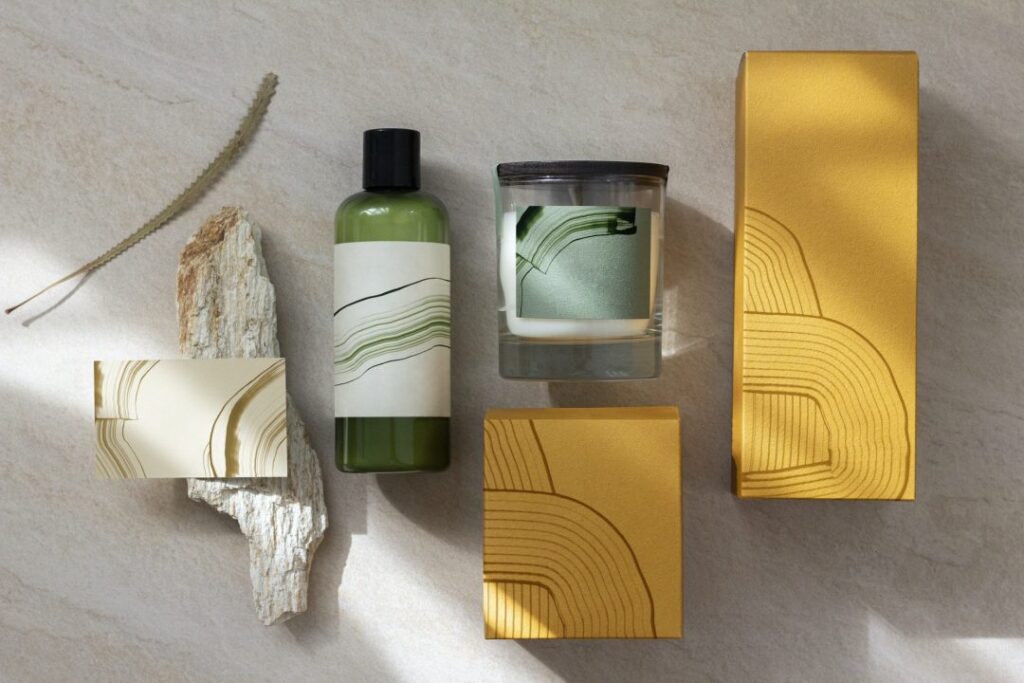
Kraft and rigid boxes earn their keep on presentation rather than protection. A kraft box reads as natural and premium without much printing at all; a rigid box feels more like a finished product the moment someone opens it. Both suit retail shelves, gift sets, and anywhere the unboxing itself is part of what the customer is paying for.
Poly bags and printed pouches are the lighter, cheaper option for apparel, baked goods, or small retail items that do not need structural protection, just a clean, branded surface and a seal.
Four things move the price more than anything else: box size and structural complexity (a simple flat box costs less to produce than one with internal dividers or a custom window), print method (a shorter digital print run costs less upfront than offset printing, which needs a plate set-up cost that only pays off at higher volumes), finish (matte, gloss, or an uncoated kraft look each cost differently), and order quantity, the single biggest lever on price per unit.
Because every one of those variables changes the number, request a quote with your box size, rough quantity, and what you are packing, rather than expecting a single published price to cover every project.
It depends mainly on print method. Digital printing does not need the plate set-up that offset printing does, so smaller custom runs are realistic without eating your whole budget on set-up alone. Offset printing has a real fixed cost before the first box rolls off the line, so it only makes financial sense once your order quantity is large enough to spread that cost thin.
If you are testing a new product or a new design before committing to a bigger batch, say so when you request a quote — a trial-sized first run is a reasonable, common request, not an inconvenience.
It is rarely just the logo. Packaging reads as branded when the logo placement, colours, and typography actually match what is already on your business cards, signage, and other printed material, not a slightly different blue because the box was briefed to a different supplier on a different day. A deliberate finish choice and a small interior touch — tissue paper, a thank-you card, a QR code to your site — do more for how premium a box feels than most people expect from something this small.
If your logo was designed somewhere else, or needs adapting for print rather than screen, that is artwork preparation work, not packaging work — worth sorting out before the box goes into production rather than after.
Yes, and this is the gap most Harare branding ends up falling into. A lot of businesses order packaging, signage, and corporate wear from separate suppliers on separate timelines, and the result is a brand that is subtly inconsistent across every touchpoint a customer actually sees — a slightly different shade here, a different logo crop there. Treating packaging as part of one connected branding rollout, the same way we think about corporate wear decisions, usually produces a more consistent result with less back-and-forth.
Four things make a briefing conversation fast instead of slow: your logo file, the dimensions and weight of what you are packing, how it travels or gets displayed (courier, retail shelf, hand-delivered gift), and a rough order quantity. Bring those four and a decent supplier can recommend a material and print method on the spot, instead of sending you back and forth over email for a week.
| Corrugated | Kraft / Rigid | Poly Bag / Pouch | |
|---|---|---|---|
| Best for | Shipping, courier, bulk transit | Retail shelf, gifting, unboxing | Apparel, baked goods, small retail items |
| Protection level | High — built for transit | Moderate — built for handling, not drops | Light — seals and protects from dust/moisture only |
| Branding surface | Good, full exterior print | Excellent — premium feel out of the box | Good for a clean, simple design |
| Typical order size | Scales well at volume | Flexible — small gift runs to retail volume | Flexible, especially via digital print |
| Turnaround at Solid Arts | 3 days total; 24 hours after design approval | 3 days total; 24 hours after design approval | 3 days total; 24 hours after design approval |
More complex structural packaging — custom dielines, large production runs, or multiple box sizes in one order — can extend this slightly beyond the standard three days; ask about timing for your specific project when you request a quote.
Know roughly what you need? Request a quote from Solid Arts and get a real price for your box size and quantity. Still need your logo or artwork prepared first? Our graphic design team can build that, then send it straight to production.
Corrugated board is built for protection and transit, the right choice for anything shipped by courier or bus. Kraft and rigid boxes are built for presentation, suiting retail shelves and gifting where the unboxing itself matters more than withstanding rough handling.
It depends on print method. Digital printing supports smaller custom runs without a plate set-up cost, while offset printing has a fixed set-up cost that only makes sense at higher volumes.
It depends on box size, structural complexity, print method, finish, and quantity, so we don’t publish a single price. Request a quote with your specifics and we’ll confirm a real number.
Yes — that consistency is the point. Bring your existing brand colours, logo file, and any signage or corporate wear already in production, and we’ll match the packaging to it rather than treating it as a separate project.
Standard turnaround is three days total for design and production, with items ready 24 hours after you approve the design. More complex structural packaging or larger production runs can extend this slightly — worth confirming when you request a quote.
Yes. A trial-sized first run is a normal request, especially with digital printing, which doesn’t carry the set-up cost that makes small offset runs expensive.
There isn’t a universally right packaging choice. There’s a right one for what you’re packing, how it travels, and the impression you want someone to have in the three seconds between opening the box and seeing what’s inside.
If you’re briefing a packaging run soon and still deciding between corrugated, kraft, or something lighter, that’s a short conversation, not a research project. Request a quote from Solid Arts and we’ll recommend a material and print method for your product and budget — and if you’re already planning signage or corporate wear for the same rollout, we can treat all of it as one connected branding project instead of three separate ones.
A box is the last thing your customer touches before they see what they actually bought. Make it count.

 Optimized by Seraphinite Accelerator